Rust anti raid sky settlement build shows how to protect loot above the reach of raiders
Video: I Built an anti raid sky settlement in Rust...
You can order the same kind of articles for your own video to boost it on YouTube and Google. Just message the Telegram bot @sat_sit_bot. Articles with your video embedded are written and posted by the bot itself — on popular topical sites (no ads). Try it free: 50 articles on us.
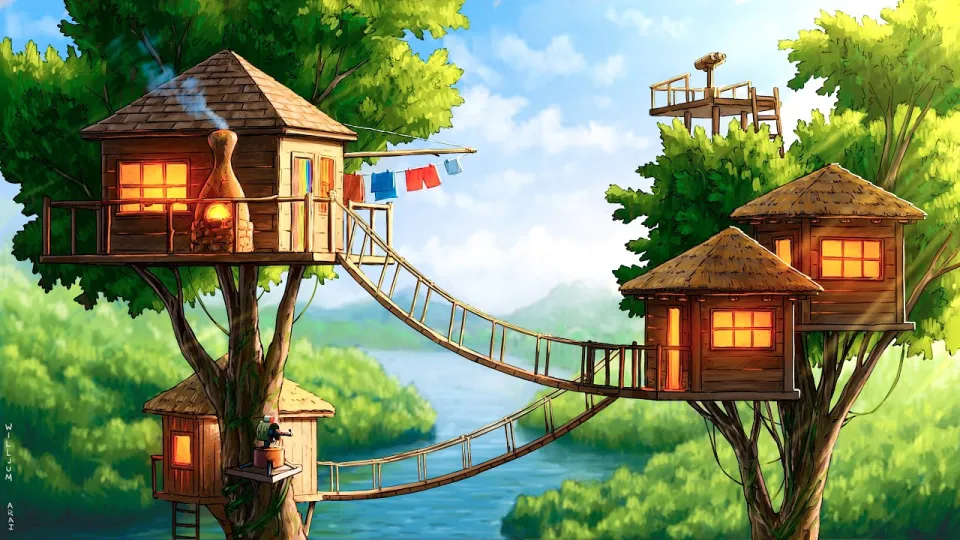
A Rust anti raid sky settlement is a base built high above the ground so that raiders must spend far more explosives, time and effort to reach the loot than the loot is worth. Instead of stacking walls, the builder stacks distance: the main loot sits on an elevated platform that requires towers, ladders or a long rocket angle to access. Willjum's solo survival video walks through building and living in exactly this kind of base, and the design logic is worth breaking down even if you never watch a minute of it. If you want to support more experiments like this, the channel's Patreon page is where bonus content and behind-the-scenes material live.
Why height beats walls in Rust base defense
Rust raid economics favor the defender who makes the attacker climb. A standard 2x2 with honeycomb forces a raider to chew through several stone or metal walls, and every wall has a known sulfur price. A sky settlement changes the equation because the attacker cannot simply walk up to the loot room with a stack of rockets; they need a stable firing platform, a twig tower that can be shot down, or a ladder that leaves them exposed on the side of a cliff-like structure.
Three factors make vertical distance expensive for the raider:
- Angle. Rockets and C4 need a surface to stick to or a line of sight to splash. A loot room suspended well above the ground gives fewer valid impact points.
- Exposure. Building a raid tower in the open takes minutes, and minutes on a live Rust server mean counter-raiders, patrol helicopters and neighbors with bolt action rifles.
- Cost inversion. If reaching the loot costs 20+ rockets and the loot is a few boxes of components, most raiders move on to an easier compound.
The trade-off is that the defender also pays: everything in the sky needs support, and support needs upkeep.
How a sky settlement is actually assembled
A sky settlement in Rust is built from the top down around a small, cheap core. The most common approach is a compact loot platform on stilts or on a natural high point, with a separate ground-level staging area for crafting and storage of building materials.
A practical build order looks like this:
- Pick the terrain. A cliff, a rock formation or a high plateau near a monument gives free height. Building over flat ground means paying for every meter of elevation.
- Place the tool cupboard first. The TC must sit somewhere raiders cannot easily splash it, usually inside the elevated core rather than at ground level.
- Build the access route as the weak point. Stairs, ladders or a jump-up entrance are what raiders will target, so treat them as a funnel rather than a shortcut.
- Keep the loot small and split. One box of sulfur in the sky and one box on the ground means a successful raid never takes everything.
- Add false floors and decoy rooms. A raider who blows into an empty room has burned explosives for nothing.
Willjum's version leans on the same principle solo players rely on: the base does not need to be unraidable, it needs to be unprofitable.
Upkeep, materials and the solo player's budget
Upkeep is the hidden cost of any elevated Rust base, and it scales with the number of building blocks, not with how impressive the base looks. A tall structure with many foundations, walls and ceilings drains stone, metal fragments and high quality metal every 24 hours, and a solo player who misses a day can lose the whole settlement to decay.
For a sky settlement, budget for the following:
- Stone for the shell. Cheap and plentiful, but weak against rockets; use it for decoy layers.
- Metal fragments for the core. Sheet metal and armored doors protect the loot room and the TC.
- High quality metal for key doors. Garage doors and armored doors are the standard for anything holding sulfur or explosives.
- Wood for twig scaffolding. Twig is temporary; never store loot behind it.
A solo player should size the base to their farming rate. A settlement that costs more upkeep than one player can gather in a session becomes a liability, and raiders know that abandoned sky bases decay into free loot.
What raiders actually do against elevated bases
Raiders adapt, and the anti raid sky settlement is a response to specific tactics. Understanding the attacker's playbook is the fastest way to fix holes in a build.
- Raid towers. Raiders build twig or wood towers to reach the same height. Defenders counter with a clear line of sight from the roof and with traps on the approach.
- Ladders and climbing. A ladder placed on an outer wall turns a vertical base into a horizontal one. Overhangs and lip walls make ladders useless.
- Rocket splash from above. A raider standing on a nearby hill can hit a roof directly. Roofs need the same reinforcement as walls.
- Eco raids. A small group with satchels will test doors and soft sides first. Doors should always be stronger than the walls around them.
The lesson from solo survival content is consistent: the base that survives is the one where every route to the loot costs the attacker more than the loot itself.
Common questions about sky bases in Rust
Players who watch a sky settlement video usually ask the same handful of things, and the answers are practical rather than theoretical.
Is a sky base allowed on official servers? Yes, building above ground is normal Rust construction; there is no rule against height. Server-specific rules may limit building inside monuments or near certain areas, so check the server's own guidelines.
Does it survive a full wipe cycle? Only if upkeep is maintained daily. Decay is the most common killer of elevated bases, not raiders.
Can a solo player build one? Yes, but keep it small. A one-room sky core with a ground staging base is far more realistic for a solo than a multi-floor fortress.
Why not just honeycomb a normal base? Honeycomb works and is cheaper to maintain. The sky approach is a supplement, not a replacement, and many players combine both by putting the real loot high and the obvious loot low.
Useful links
- Willjum on Patreon — bonus content and support for the channel
- Willjum on Twitch — live survival streams
- Willjum on Twitter — updates and clips
- Creative Commons Attribution 4.0 — license used for music in the video
Final takeaway
The anti raid sky settlement is less a trick base and more a statement about Rust raid economics: make the attacker pay in time, exposure and explosives, and most of them will go elsewhere. Willjum's build shows the concept in solo survival conditions, where upkeep discipline matters as much as the design itself. Anyone copying the idea should start small, keep the tool cupboard protected, and split loot between the sky and the ground. The channel Willjum is the source of this build breakdown, and the Patreon page is the place to support more of these experiments.
Key takeaways
- The build is an elevated settlement placed high above ground so raiders must spend more boom to reach the loot than the loot is worth.
- Sky bases trade cheap vertical distance for expensive access: ladders, twig towers and rockets all cost the attacker time and sulfur.
- Upkeep scales with structure size, so a sky settlement needs a stable stone or metal income to survive a full wipe.
- The concept comes from Willjum's solo survival video, where the base is built and tested against raid attempts on a live server.
- Height alone is not enough: loot rooms, TC placement and false floors decide whether the base actually holds.
Source: I Built an anti raid sky settlement in Rust... · Markdown version
Questions & answers
Do you need to play Rust to enjoy a sky base video?
No. A large part of the audience follows solo survival content for the storytelling and the build progression rather than for gameplay tips. The base design still makes sense as a walkthrough of raid economics, even for viewers who have never launched the game.
Is a sky settlement better than a normal honeycombed base?
Not strictly better, and not cheaper. Honeycomb gives reliable protection for a low upkeep cost, while a sky settlement adds vertical distance that frustrates raiders. Many players combine the two by keeping obvious loot low and the real valuables high.
How much upkeep does an elevated base need?
Upkeep depends on the number of building blocks, so a tall structure with many foundations and ceilings drains more stone and metal than a compact one. Solo players should size the settlement to what they can farm in a single session and check the tool cupboard daily.
What stops raiders from building a tower to the same height?
Nothing stops them completely, but exposure does. A raid tower takes time to build in the open, and defenders with a clear line of sight, traps on the approach and counter-raiders nearby make that time expensive. Overhangs and lip walls also block ladders.